Chopsticks are the one thing at the table every diner touches and almost no operator thinks about until a batch splinters or a supplier runs short. The first real decision is not brand or color but whether you hand out a fresh pair every service or wash and reuse the same set for years. That single choice ripples into your food cost, your dish pit, your waste stream, and the impression the table makes before the food arrives. This guide walks through how to choose, starting from how the chopsticks will actually be used.
Match the chopstick to the service, not the other way around
High-turnover counters, delivery, and events lean disposable for obvious reasons: no washing, no sorting, no loss, and a hygienic sealed pair every time. A sit-down restaurant that already runs a dish machine can absorb reusables and recover their cost over hundreds of services, while also cutting the steady spend on single-use stock. Before you compare materials, be honest about three things: how many covers you turn a day, whether your dish pit has the capacity and the hot-water sanitation to handle another item, and how much the table setting matters to your brand. Those answers usually point clearly to one camp or the other, and plenty of operations sensibly run both, reusable for dine-in and disposable for takeout.
Disposable chopsticks: convenient, but read the material
Bamboo is the workhorse of disposables. It is a fast-regenerating grass, typically finished with a thin lacquer that gives it strength and moisture resistance, and it splinters less than cheap softwood. Birch, aspen, and poplar are the common wooden alternatives, usually lacquered or lightly finished; they are inexpensive but more prone to cracking if they sit in moisture. Denser coated paper chopsticks exist too, aimed squarely at single use.
Material also carries a couple of quiet food-safety flags worth knowing. Very white wooden chopsticks can indicate heavier sulfur-dioxide bleaching, so a natural, slightly uneven color is usually the better sign. Some budget stock is dusted with talc, and lacquered sticks should never be used for grilling because the coating is flammable. Shelf life matters as well: wooden disposables are generally best used within about four to five months, and even bamboo is happiest stored dry rather than left in a humid prep area for a year. None of this makes disposables a poor choice, but it is a reason to buy from a supplier who can tell you what the finish is.
Reusable chopsticks: material decides the lifespan
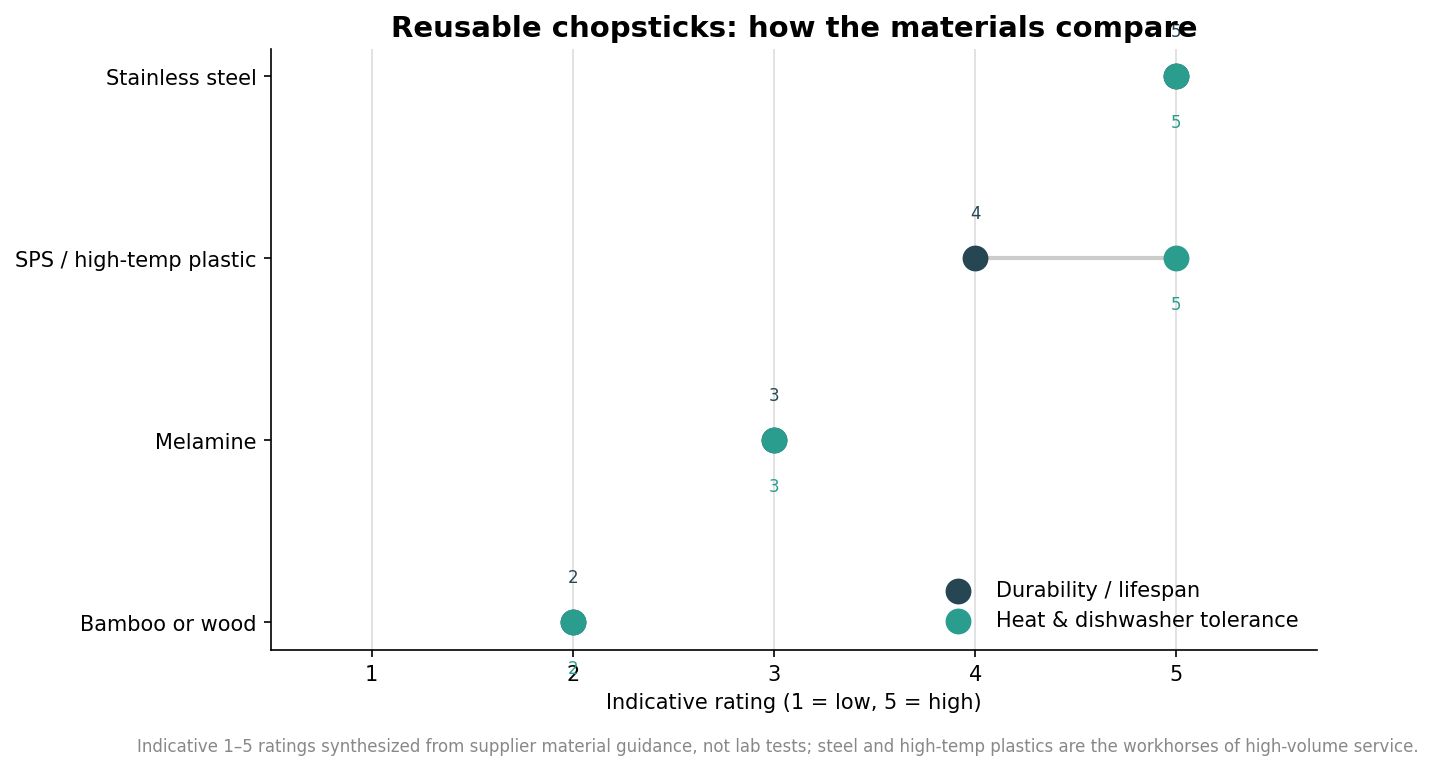
With reusables, the material is the whole story, because it determines how many trips through a commercial dishwasher the set survives. Stainless steel is the most durable and shrugs off heat and detergent, though it is slippery for some diners and heavier in the hand. SPS and other high-temperature reinforced plastics, often sold as fiberglass chopsticks, are the restaurant favorite: dishwasher-safe, heat-resistant, long-lasting, and available in a matte finish that grips food well. Melamine sits a rung below on longevity. Natural bamboo and wood can be reused at home but are the least suited to a busy service, since repeated soaking and high-heat washing eventually raise the grain and shorten their life. If you are buying reusables to print or brand, the reinforced plastics generally hold a logo and a consistent color best. Whatever material you land on, confirm it is rated for the temperature your dish machine actually reaches on its sanitizing cycle, and budget for a small ongoing replacement rate, because even the toughest sets get dropped, chipped, or carried home in a diner’s bag over time.
Getting the length right for your diners
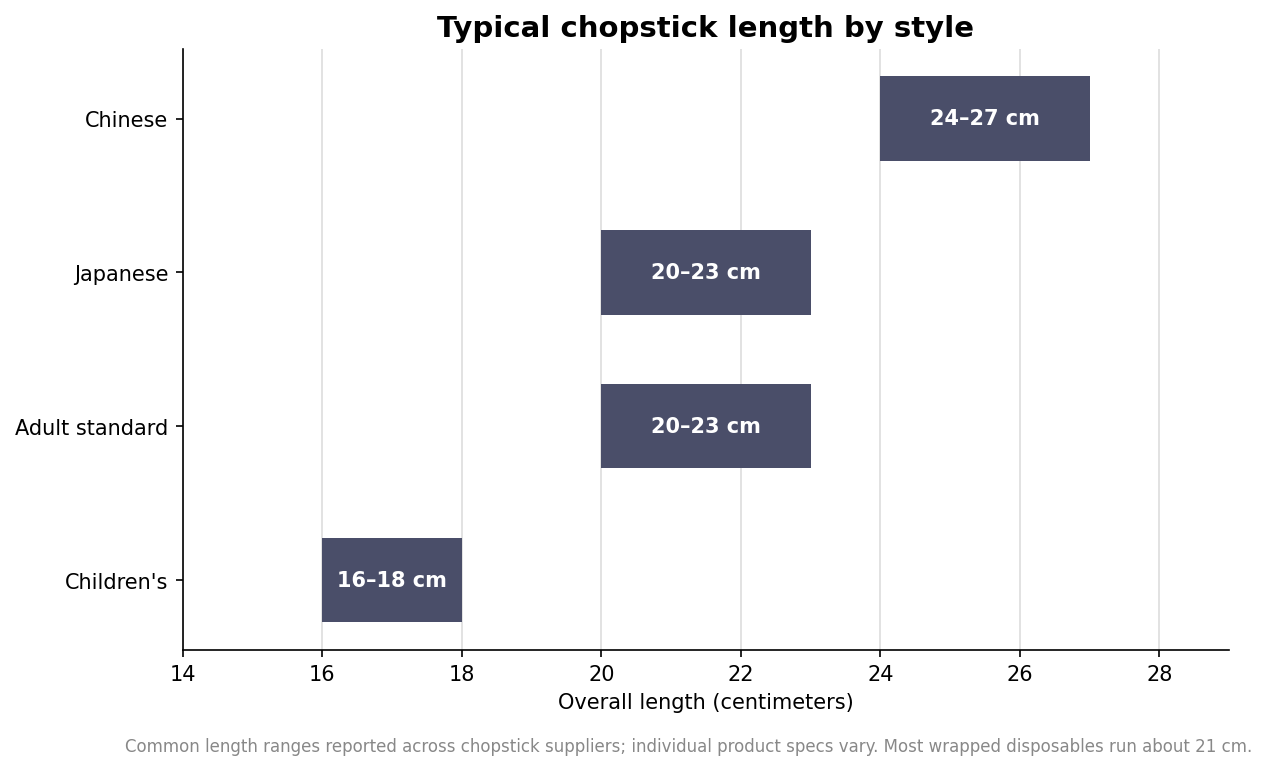
Length is easy to overlook and noticeable when it is wrong. Chinese-style chopsticks run longest, roughly 24 to 27 centimeters, which suits shared, family-style dishes reached across a table. Japanese-style pairs are shorter, about 20 to 23 centimeters, and are tapered to a finer point for fish and rice. A general adult standard also lands in that 20-to-23-centimeter band, while children’s chopsticks are shorter still at 16 to 18 centimeters. Most individually wrapped disposables you will see in the United States are around 21 centimeters, a comfortable middle. Choose length for your cuisine and your table style, and if you serve a lot of families, it is worth stocking a shorter option for kids.
Making the call
Run the simple version of the math. Disposables are a recurring per-pair cost that scales directly with covers, plus the sleeve if you brand them; reusables are an upfront purchase plus washing labor and a slow trickle of replacements as sets wear or walk out the door. Somewhere past a few hundred reuses, quality reusables usually come out ahead on cost per meal, which is why established dine-in rooms tend to own them and high-volume takeout tends not to.
Sustainability often tips the same way. Widely cited industry estimates put global wooden-chopstick production in the tens of billions of pairs a year, drawing on millions of trees, and some producing countries have taxed single-use wooden sticks to curb the impact. Bamboo softens that picture because it regrows quickly, and reusables sidestep it once they have paid back their footprint. Weigh that against the hygiene and labor reality of your own dish pit rather than a slogan. Whichever way you land, specify the material and length deliberately, ask your supplier about the finish and the food-safety treatment, and the small stick at the top of the place setting will quietly do its job for years.